


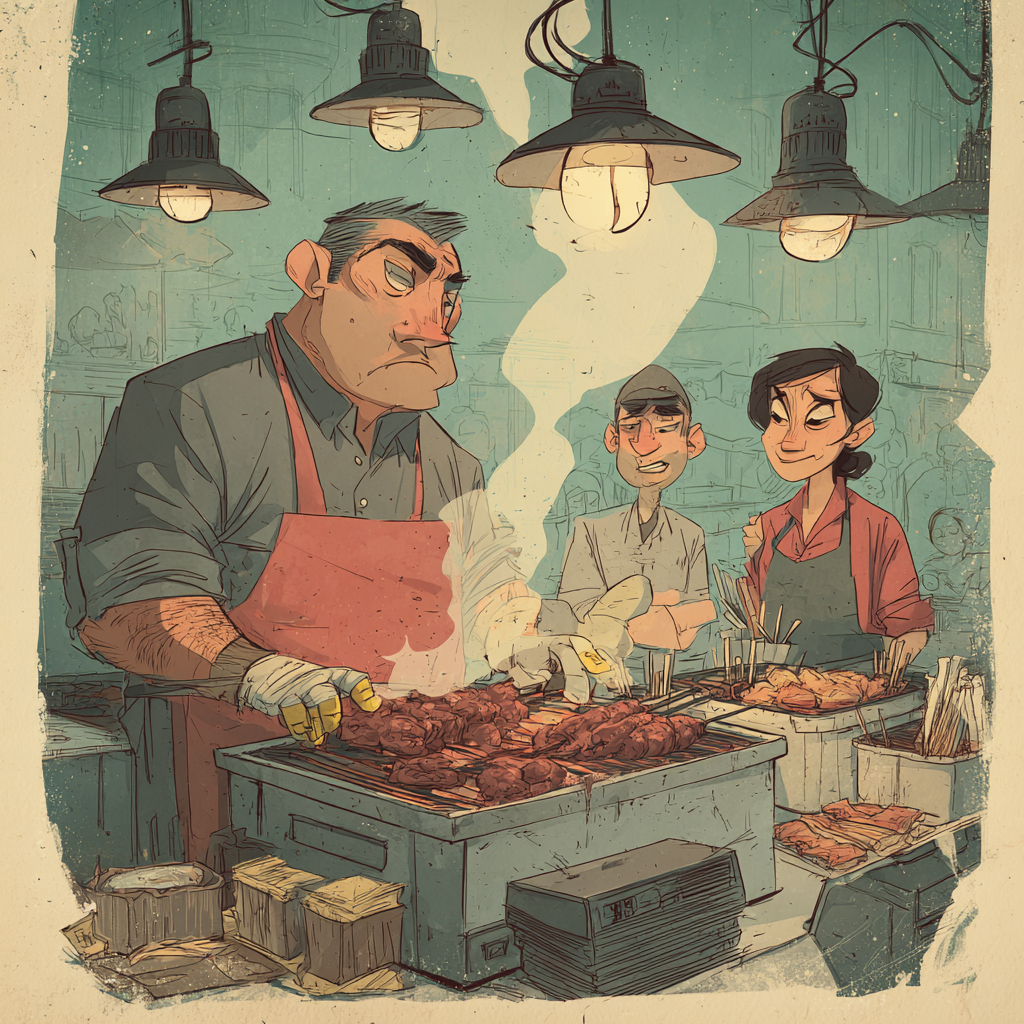
Every Meal Proves That Food Is Political
Full plastic fork goes in my mouth before I even finish paying. Steam’s still coming off the meat. Burns my mouth. Blister already starting. Don’t even blink. Sweet, then acid. Caramel running down my wrist. Flakes of pastry cracking off and sticking to my shirt. It’s a legit mess. Which is what I came for.
There’s a line. Always a line. South end of Queen Vic Market. Past fruit stalls closing up, fish guys hosing guts into the drain. Noise. Heat. Hive of drunk students, tourists, work-shift ghosts stretching paychecks for something hot.
The lamb’s good. Not great. But that doesn’t matter.
He matters.
Behind the griddle
Furkan’s been here seven years. Came to Melbourne from Gaziantep. Or near there. “Small town. Close to Syria border. Not city like here.”
He’s maybe forty. Or thirty and screwed by the sun. Hair buzzed close, middle finger taped stiff from an old fracture. One of those guys who’s always moving even standing still. Wipes the counter. Grabs more dough. Adjusts tongs that don’t need adjusting. You offer help, and he wouldn’t know how to stop moving long enough to accept.
He runs this stand with his cousin. Umit. Quiet one. Does the lettuce, keeps the register, never looks up unless it’s urgent. Furkan handles the flatbread. The grilled meat. The show.
“You Turkish?” a woman asks him in line. The way people ask when they’re just back from Cappadocia and want a cookie for it.
“No. Human.” He smiles when he says it. But it lingers like maybe he’s had to answer that one too many ways.
They make gozleme. But different. Fluffier. Almost flaky. Not spun for the tourist version. When I ask why, Furkan shrugs. “Because that’s how my uncle made. His pan was heavy like shame.” He chokes out a laugh. I do too. Then he actually looks at me. “Have you ever lifted shame? Heavy like that.” I pretend to get it. Not even close.
Waiting in steam and onions
Food is fast. But the recipe isn’t. Dough sat for hours. Meat got rubbed last night when the air was still thin and loud with birds.
You’re eating stories you weren’t invited to.
People talk about authenticity. I’ve done it. Like it’s something you can order. The arrogant western appetite for a food that tells someone else’s story but makes you the one discovering it. Your Instagram gets the light, not the cook.
And yeah, I ask Furkan where he learned. What brought him here. But he’s working. He answers what he wants. Doesn’t need to hand his life over for my curiosity. Which is still performative. No resolution to that. You ask because it makes you feel human. But not too long — your food’s getting cold.
He says his dad used to cook for army barracks. Big pots. Minimal seasoning. “Salt counts.” He chuckles. “Next day, everybody shit solid. That was the measure.”
I ask if he’d go back. He shrugs, flips the lamb. “To what?”
His kid’s in school here now. Umit got married last year. His wife doesn’t like the smell of meat in his clothes. But she folds the takeout boxes every Sunday night while they rewatch home videos from 2006. Furkan says they keep everything on a hard drive labeled “Before.” Won’t tell me before what.
Steelman lives in the back kitchen
I used to think knowing made me different. That seeing the labor, noticing the burns, asking the cook’s name — that it meant something. Meant I was less of a parasite. At least a conscientious one.
But here’s the thing. That woman buying a pulled pork slider and not wondering how it got there? Guy double-shifting at the warehouse. Eats fast. Doesn’t look up. Doesn’t ask who folded the dumplings. Maybe that’s better. Cleaner.
Tell yourself food is political. Then buy something for eleven bucks that took someone five hours to prep and fifteen years to perfect. And when he says “No sauce on this one,” you don’t argue. It’s his food, right?
Except it’s not.
Not once the money’s exchanged. Once it’s yours, it’ll do what you want. Double sauce. No pickles. Vegan substitution. Faster, please.
A part of me wants Furkan to be angry. Wants him to say “No, fuck that,” and take the plate back. Plant a flag. Reclaim something. But he doesn’t. He smiles and adjusts the portion. Keeps the line moving. Because anger doesn’t pay rent.
He’s halfway through a story about his uncle. And I’m checking the heat lamp. Wondering how much longer. Feel like shit. Still do it.
And Furkan’s not a symbol. He’s not here to teach me anything. He’s here to move the queue, make rent, pretend like jokes fill the gap between languages. The contradictions don’t cancel. They collide.
Still chewing
I eat sitting on a milk crate behind a pole. Guy tossing out trash almost bumps me. I don’t move. Gozleme’s leaking down the wax paper.
There’s a smear of lamb fat on my pants. Smells incredible. Woman next to me eats silently. Head down. Her nails are painted gold. She’s wearing hospital scrubs.
Furkan calls goodnight to someone in Arabic. They don’t hear him.
I don’t post the photo I took of the food. Doesn’t look as good once I split it open. Brown mess. Lonely on the wax paper. Not pretty. Just honest.
Gozleme’s gone. My fingers are greasy. Palms itch from too much chili oil. I swipe them across my jeans. Immediately regret it. It’ll stain. But so do stories.
So do people.
